 “Systems are designed to get the results they get.”
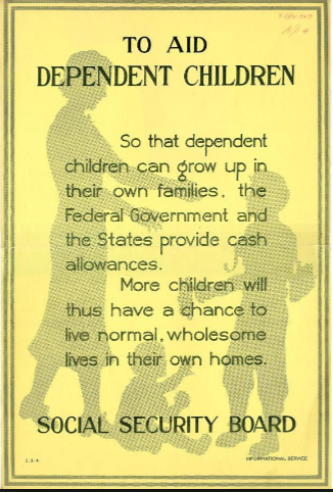
Children need their mothers. During the Great Depression, this societal value was reinforced by state-funded mandates known as the ‘mothers pension movement’. A post-war nation coupled with the collapse of the stock market marked a significant change in the traditional family structure. Death, abandonment and unemployment among other factors resulted in large numbers of poor children living in single-parent homes led by women. The majority of the nation believed that government had a civic duty to protect and provide for these poor, fatherless children. The traditional family structure was the underpinning of mainstream American society and needed to be preserved at all costs. These pensions were a financial balm that allowed single and widowed mothers the opportunity to raise, nurture and supervise their children. Women with children needed the resources capable of keeping them out of the workforce and in the home. Children were able to stay home and be raised by a parent who was available to them. Single mothers did not have to work. This was a good thing.
60 some odd years later, the 90’s brought about new language to describe the offspring of the mother’s pension program. Aid to Dependent Children, a federally-funded program, was a terrible failure that did not reduce poverty or promote self-sufficiency. The program encouraged out-of-wedlock births by women looking to benefit by having multiple children and choosing not to join the workforce. These ‘welfare queens’ were lazy and shiftless and unmotivated. These women were a drain on the country and threatened the values and ethics of our great society. Single mothers did not have to work. This was a bad thing.
When we think about outcomes across time and social groups, was this program successful? Absolutely. The system did exactly what it was designed to do. Single, unwed mothers were able to stay at home and out of the workforce. We have systematically blamed and denigrated unwed mothers, teenage mothers and mothers of color for benefitting from systemic outcomes aligned with the original intent, design and function of welfare. When the face of the single, unwed mother changed, our national perspective changed. However, the policies, practices and procedures implemented in the 1930s to create the conditions needed for program success were sustained over time. While our opinions, thoughts and beliefs shifted, the system did not. Single mothers did not have to work. This was a systems thing.
I’m fascinated by systems thinking and systems change work. Systemic principles are the foundational guideposts that sit underneath organizations and give language to behaviors, habits and practices that emerge and sustain over time. Systems change, systems thinking, complexity theory, organizational development, human systems dynamics, whole systems thinking are some of the research-based theories with slightly different definitions. Names like Michael Fullan, William Tate and Glenda Eoyang are a few of the practitioners who have made contributions with systems thinking at the core of their work. It’s a big field with lots of ideas, people and philosophies.
Systems thinking and systems change sits at the center of Coplexity’s work. Great work often fails because organizations don’t take the time to address, structure and plan how people interact with each other and interact around the work. For the most part, systems change work within organizations falls within the scope of a basic definition.
Shifts of interrelated parts or elements within an organization that streamline access by removing barriers or obstacles that get in the way of organizations being able to provide better service to constituents, community or clientele.
Regardless of where you fall on the org chart, we are all merely parts of a system that is constantly changing, adapting and emerging. Our goal is to help you think through and plan for establishing systemic elements across your work that are responsive to what shows up, both certain and uncertain. We’re here to help organizations serve their people and communities in better ways.
I’m still learning a lot about this field, and I’m glad you decided to join me on this journey. Whether you leave after this post, or stay for a little while, my hope is that we learn and grow together.
I blog quitre often and I really appreciate your information. This
article has truly peaked my interest. I will book mak your blog and
keep checking for new information about once a week. I subscribed tto your Feed too.
http://frankpgvl814blog.pointblog.net http://frankpgvl814blog.pointblog.net